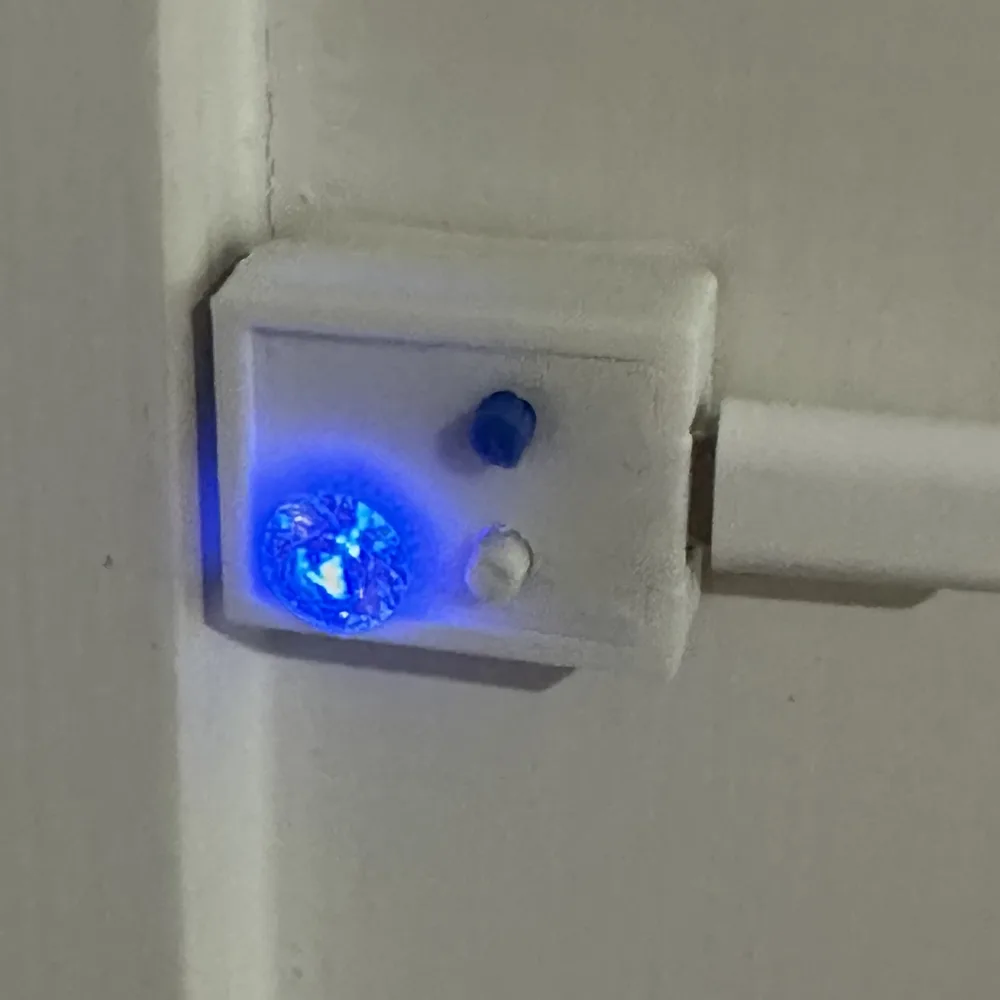
BusyBeacon — Presence, Synced Everywhere
A physical presence indicator: an LED at the door whose color is the shared truth about whether you're busy or free. Press the hardware button, click the macOS menu bar, or tap the iOS app or home-screen widget — every other client updates within a second.
The sync path is MQTT retained messages on AWS IoT Core and nothing else — no Lambda, no database, no polling. A client subscribes and the broker hands it the current state immediately. Firmware updates ship over the air as AWS IoT Jobs with sha256 verification and automatic A/B rollback, so a bad release recovers itself instead of bricking a board.
Four clients agree because one file says so: a single protocol definition generates the status table in the MicroPython firmware, the Python macOS app, the SwiftUI iOS app and widget, and the CLI — with a drift check that fails the build.
ESP32-S3 · MicroPython · AWS IoT Core · MQTT · SwiftUI & WidgetKit · Python
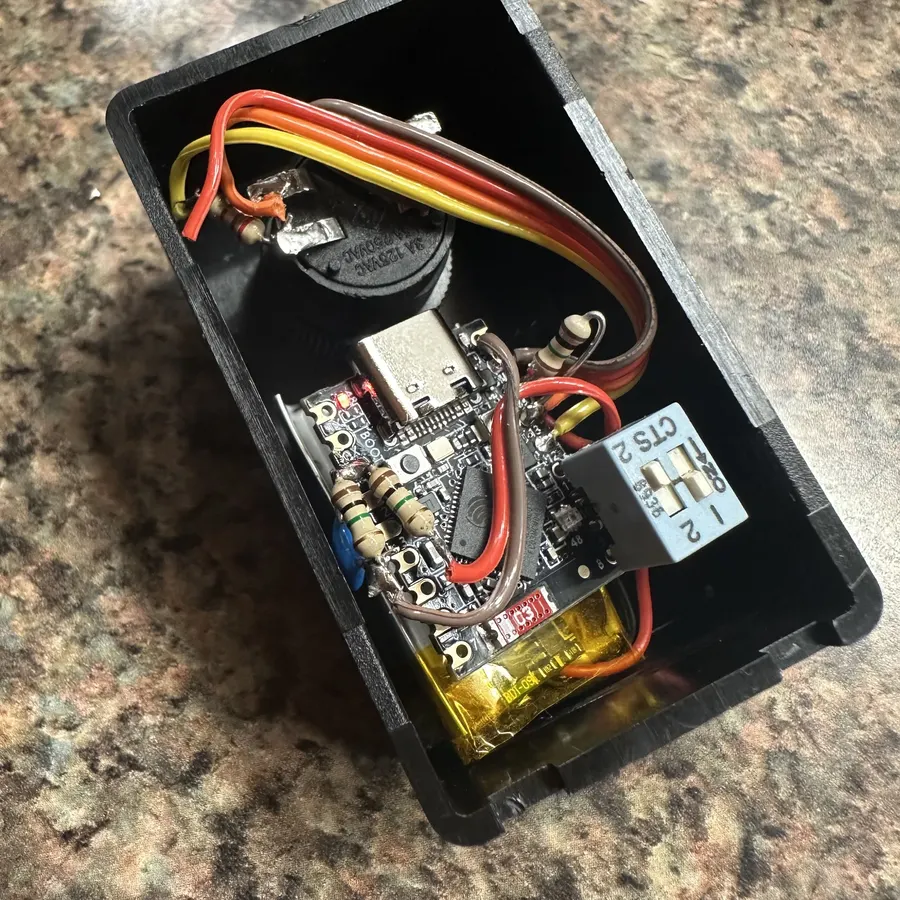
Stamper — One Button, a Year of Battery
An illuminated pushbutton on a battery-powered ESP32-S3. Press it and the board wakes from deep sleep, lights the lamp, writes one timestamped event to a time-series database, and goes back to sleep. Two presses a day on a 400 mAh cell runs the better part of a year.
The engineering is in what was left out: no clock, no queue, no retry, no local log. Every one of those was considered, costed in microamps, and cut — with a written record of what would bring it back. Power budget beat feature list, deliberately.
One button still carries a full vocabulary. A tap logs an event; a three-second hold reboots and pulls an over-the-air update; an eight-second hold parks the board awake in programming mode. The lamp tells you which gesture you're in before you let go, so a deliberate reboot never lands in the data as a phantom event.
ESP32-S3 · MicroPython · deep sleep & power budgeting · InfluxDB · OTA updates · 3D-printed enclosure
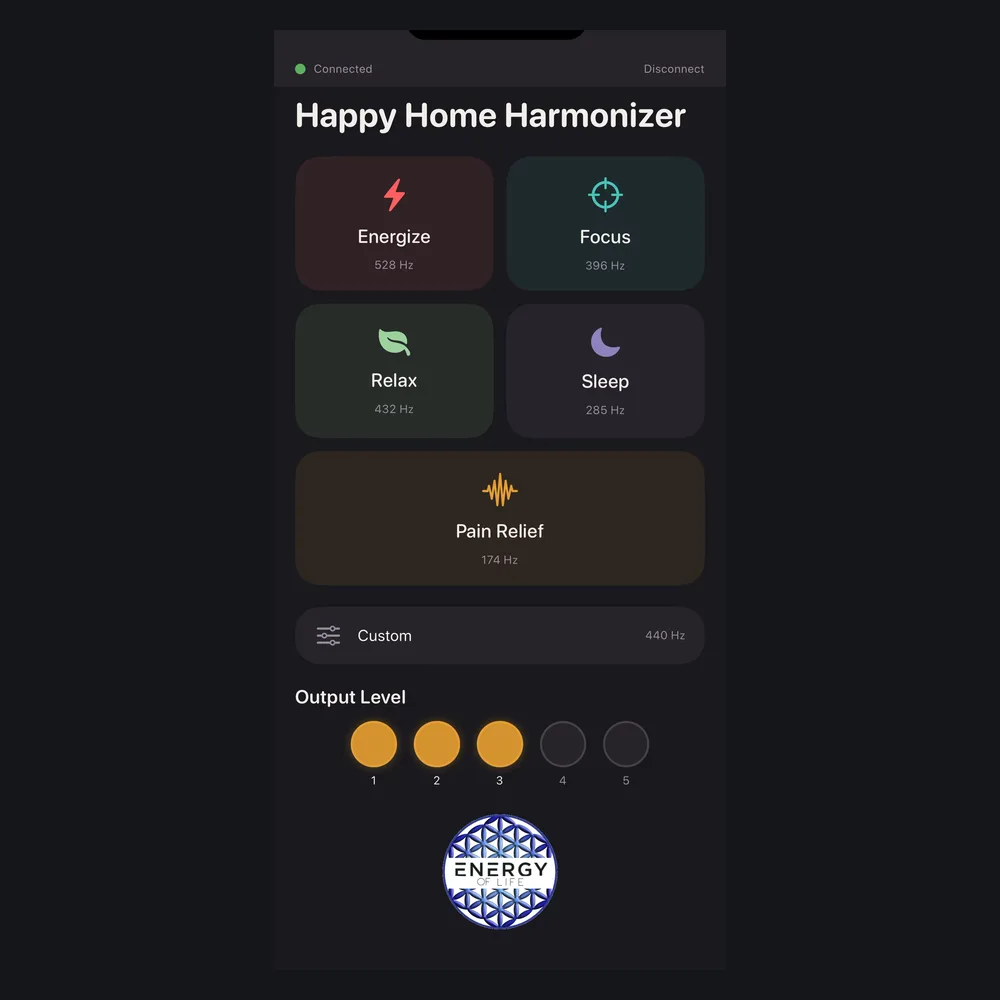
Novara — A White-Label Device Platform
A frequency-controller platform built to be rebranded: one ESP32 firmware and one iOS app, shipped as a different product per customer. The first is Happy Home Harmonizer — five wellness presets plus a custom 20 Hz–20 kHz mode, session timer, and output level, all driven over Bluetooth Low Energy.
Two microcontrollers split the job: a BLE MCU owns every piece of session state and talks to the phone, while a separate master MCU generates the output, joined by a plain ASCII serial protocol that reads the same in both directions. The BLE MCU is the single source of truth — the app only reads and reacts — and it works standalone, so the hardware can be brought up and demoed before the analog side exists.
Delivered with a host-side simulator for the master MCU, so app and firmware work continues without hardware on the bench.
ESP32-S3 · C++ / PlatformIO · BLE GATT · SwiftUI & CoreBluetooth · UART protocol design